Download (PDF, ePub, Mobi) Decentralized Spatial Computing: Foundations Of Geosensor Networks Ebook Read Online
Decentralized Spatial Computing: Foundations Of Geosensor Networks
Download or read Decentralized Spatial Computing: Foundations Of Geosensor Networks eBook in pdf, epub, kindle, word, txt, ppt, Mobi, rar and zip format. There is no limit to the number of books you can download. Decentralized Spatial Computing: Foundations Of Geosensor Networks looks good in design, features and function. The most effective function of this supplement is absolutely simple to decontaminate and control. The design and style and layout are certainly fantastic making it really appealing and beauty. Lots of individuals feel enthusiastic about purchase and utilize it. Every feature is designed to fulfill people require as the function too. It really is stunning and ideal product for quick setup, upkeep, and control device..

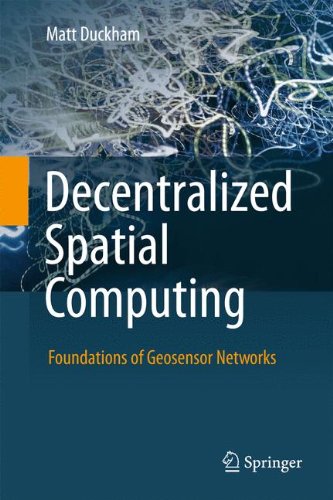
Features Decentralized Spatial Computing: Foundations Of Geosensor Networks
Honestly, the item is rather smart function, healthy and safety for users. Decentralized Spatial Computing: Foundations of Geosensor Networks is incredibly beneficial to finish all user requires. The planning is extremely light, appealing and stylish one. With the newest innovation, this product can meet all individuals expectation with fantastic function and function. It is possible to invest in the dedicated vendor. Individuals may get and acquire it online over the internet by this site. The vendor is rather helpful serve and send out your product on time shipment. It is very exceptional service to the high quality product. The one characteristic to bear in mind about this device there's no person felt trouble and dissatisfied with it. It works perfectly since the ads said previously.
Descriptions Decentralized Spatial Computing: Foundations Of Geosensor Networks
This can be a key point to take into account, as consumer self-confidence in a few companies over others dictates that more of many have been purchased and used with satisfaction. Surely you will convey more security buying from one of these popular suppliers.After you have done all of the search, you can find one last thing to view as well as perhaps use to finish your selection process. Suppose you've got narrowed your selection as a result of 3 products , however they are uncertain selecting the one to buy.
Computing increasingly happens somewhere, with that geographic location important to the computational process itself. Many new and evolving spatial technologies, such as geosensor networks and smartphones, embody this trend. Conventional approaches to spatial computing are centralized, and do not account for the inherently decentralized nature of "computing somewhere": the limited, local knowledge of individual system components, and the interaction between those components at different locations. On the other hand, despite being an established topic in distributed systems, decentralized computing is not concerned with geographical constraints to the generation and movement of information. In this context, of (centralized) spatial computing and decentralized (non-spatial) computing, the key question becomes: "What makes decentralized spatial computing special?"
In Part I of the book the author covers the foundational concepts, structures, and design techniques for decentralized computing with spatial and spatiotemporal information. In Part II he applies those concepts and techniques to the development of algorithms for decentralized spatial computing, stepping through a suite of increasingly sophisticated algorithms: from algorithms with minimal spatial information about their neighborhoods; to algorithms with access to more detailed spatial information, such as direction, distance, or coordinate location; to truly spatiotemporal algorithms that monitor environments that are dynamic, even using networks that are mobile or volatile. Finally, in Part III the author shows how decentralized spatial and spatiotemporal algorithms designed using the techniques explored in Part II can be simulated and tested. In particular, he investigates empirically the important properties of a decentralized spatial algorithm: its computational efficiency and its robustness to unavoidable uncertainty. Part III concludes with a survey of the opportunities for connecting decentralized spatial computing to ongoing research and emerging hot topics in related fields, such as biologically inspired computing, geovisualization, and stream computing.
The book is written for students and researchers of computer science and geographic information science. Throughout the book the author's style is characterized by a focus on the broader message, explaining the process of decentralized spatial algorithm design rather than the technical details. Each chapter ends with review questions designed to test the reader's understanding of the material and to point to further work or research. The book includes short appendices on discrete mathematics and SQL. Simulation models written in NetLogo and associated source code for all the algorithms presented in the book can be found on the author's accompanying website.
In Part I of the book the author covers the foundational concepts, structures, and design techniques for decentralized computing with spatial and spatiotemporal information. In Part II he applies those concepts and techniques to the development of algorithms for decentralized spatial computing, stepping through a suite of increasingly sophisticated algorithms: from algorithms with minimal spatial information about their neighborhoods; to algorithms with access to more detailed spatial information, such as direction, distance, or coordinate location; to truly spatiotemporal algorithms that monitor environments that are dynamic, even using networks that are mobile or volatile. Finally, in Part III the author shows how decentralized spatial and spatiotemporal algorithms designed using the techniques explored in Part II can be simulated and tested. In particular, he investigates empirically the important properties of a decentralized spatial algorithm: its computational efficiency and its robustness to unavoidable uncertainty. Part III concludes with a survey of the opportunities for connecting decentralized spatial computing to ongoing research and emerging hot topics in related fields, such as biologically inspired computing, geovisualization, and stream computing.
The book is written for students and researchers of computer science and geographic information science. Throughout the book the author's style is characterized by a focus on the broader message, explaining the process of decentralized spatial algorithm design rather than the technical details. Each chapter ends with review questions designed to test the reader's understanding of the material and to point to further work or research. The book includes short appendices on discrete mathematics and SQL. Simulation models written in NetLogo and associated source code for all the algorithms presented in the book can be found on the author's accompanying website.
Comments
Post a Comment